Microsoft Marketplace: A Unified Hub for Cloud and AI Solutions
Posted Oct 1, 2025
On September 25, Microsoft unveiled a major consolidation move: the launch of the Microsoft Marketplace, a unified platform combining its previously separate digital storefronts, including Azure Marketplace and Microsoft AppSource (IT Pro, 2025a). This initiative is not simply about streamlining procurement. It is emblematic of a broader trend in cloud and AI ecosystems—toward integration, composability, and accessibility.
What the New Microsoft Marketplace Offers
The Microsoft Marketplace brings together tools and services across multiple product lines:
- Azure (cloud infrastructure and services)
- Dynamics 365 (business applications)
- Power Platform (low-code/no-code development tools)
- Other Microsoft ecosystem integrations
Most notably, the new hub includes over 3,000 AI and agent-type solutions (IT Pro, 2025a). These range from specialized AI copilots and industry-specific models to automation and analytics tools designed for enterprise deployment. By consolidating offerings into one storefront, Microsoft is lowering the barrier for organizations that want to adopt AI and cloud services in a cohesive way.
The Strategic Logic Behind Consolidation
The unification of Microsoft’s marketplaces must be understood against a larger industry backdrop. Customers today face two persistent challenges:
- Fragmentation – Enterprises often struggle with disconnected marketplaces, billing systems, and integration headaches.
- Adoption Complexity – The proliferation of AI tools creates decision paralysis, as CIOs and CTOs must vet solutions across multiple ecosystems.
By offering a single point of discovery, procurement, and deployment, Microsoft is not only simplifying customer experience but also tightening the network effects of its ecosystem. Each AI or cloud service added to the Marketplace strengthens Microsoft’s gravitational pull on developers, enterprises, and governments alike.
Why Private Cloud Management and Sovereignty Matter
Yet consolidation does not eliminate deeper challenges around control, compliance, and sovereignty. For many organizations—especially in regulated sectors and national governments—the question is not only what tools are available but where and how they are deployed.
- Private Cloud Management: Enterprises increasingly demand the ability to run AI and cloud services in private or hybrid environments. Whether for reasons of latency, security, or compliance, they need cloud management platforms that give them visibility and control over workloads, regardless of whether they run on-premises, in Azure, or across multi-cloud setups. Microsoft’s multicloud partnerships and hybrid tools (like Azure Arc) suggest that the Marketplace could evolve into a bridge between public marketplaces and private deployments.
- Sovereignty and Data Jurisdiction: In an era of rising geopolitical tension, data sovereignty is no longer a secondary concern. Governments want guarantees that sensitive citizen or national security data will not leave their jurisdiction. By centralizing cloud and AI solutions, the Microsoft Marketplace raises both opportunities and risks: it provides an easier way to enforce compliance policies, but also concentrates control in the hands of one vendor. Sovereign cloud frameworks—where data is processed and stored under local control—are emerging as the norm.
- The Balance of Convenience and Control: The Marketplace makes AI adoption easier, but organizations must weigh that convenience against the long-term risks of dependency. For many, hybrid cloud management and sovereign frameworks will become the necessary counterweights to marketplace consolidation.
Available Private Cloud and Sovereign Solutions
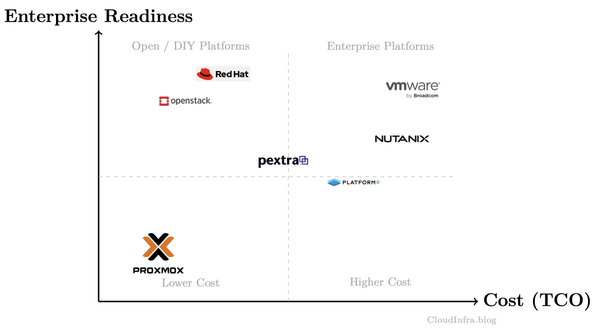
Enterprises have an expanding set of options for private and sovereign cloud deployment. These solutions combine the scalability of hyperscalers with the control of on-premises infrastructure:
- AWS Outposts: Extends AWS services into customer data centers, enabling consistent APIs, tools, and services while keeping data and workloads local.
- Azure Stack / Azure Arc: Microsoft’s private and hybrid offerings that allow enterprises and governments to run Azure services on-premises or across multiple clouds, with governance and compliance features built in.
- Google Distributed Cloud (GDC): Offers managed hardware and software for on-premises deployments, often tied to sovereign cloud use cases and telecom edge computing.
- VMware Cloud Foundation: A leading platform for private cloud environments, offering full-stack infrastructure automation, virtualization, and hybrid management.
- Nutanix Cloud Platform (Prism): Focused on hyperconverged infrastructure, Nutanix simplifies private cloud deployment and multi-cloud orchestration with one-click operations and AI-driven optimization.
- Pextra CloudEnvironment: An emerging solution designed for AI workload management in private and hybrid deployments, offering GPU orchestration, energy-aware scheduling, and flexible compliance controls for regulated sectors.
These platforms highlight a growing reality: the future of enterprise cloud is not purely public or private. It is hybrid, distributed, and sovereignty-aware.
The Normative Implications
The launch of Microsoft Marketplace is not a neutral business move. It carries normative implications for how AI and cloud ecosystems will evolve:
- Platform Power and Dependence
Consolidation gives Microsoft greater leverage over developers and customers. While this streamlines adoption, it also raises concerns about dependency: Will enterprises risk vendor lock-in as their AI and cloud solutions increasingly flow through a single hub? - Ecosystem Shaping
By curating which AI and agent solutions appear in the Marketplace, Microsoft effectively becomes a gatekeeper of innovation. This shapes which tools enterprises adopt and which fail to gain traction, granting Microsoft significant influence over the trajectory of the AI economy. - Sovereignty and Control
The tension between centralized convenience and decentralized sovereignty is coming to the fore. Enterprises and governments must ask: can we enjoy the benefits of an integrated marketplace while retaining local control, compliance assurance, and private cloud autonomy? This question will shape the trajectory of AI adoption globally.
The Road Ahead
Microsoft’s unified Marketplace represents more than an incremental improvement in digital storefront design. It is part of a strategic pivot toward integrated, composable ecosystems, where cloud infrastructure, AI agents, and enterprise applications co-exist under one roof.
For enterprises, this promises efficiency, scalability, and reduced complexity. For policymakers, it raises critical questions about sovereignty and regulatory oversight. And for Microsoft, it signals an evolution from being merely a cloud provider to becoming an orchestrator of the global AI marketplace itself.
The challenge now is ensuring that as these ecosystems consolidate, private cloud management and sovereign frameworks remain at the center. Otherwise, the convenience of a unified marketplace risks becoming a new form of dependency—where innovation is abundant, but control is ceded.
References
- IT Pro. (2025a). Microsoft Marketplace launch brings AI apps and cloud solutions together. Retrieved from IT Pro