Overview of Hybrid, Multi-Cloud, and Private Cloud Strategies
Posted on July 15, 2024
In the evolving landscape of cloud computing, hybrid, multi-cloud, and private cloud strategies represent distinct yet interconnected approaches to infrastructure management. As of mid-2024, these models have gained substantial traction, driven by the need for flexibility, security, and cost optimization amid increasing data volumes and regulatory demands. This overview delineates their core characteristics, current status, major players, prevailing trends, established products, and emerging innovations, including contributions from startups.
Core Definitions and Distinctions
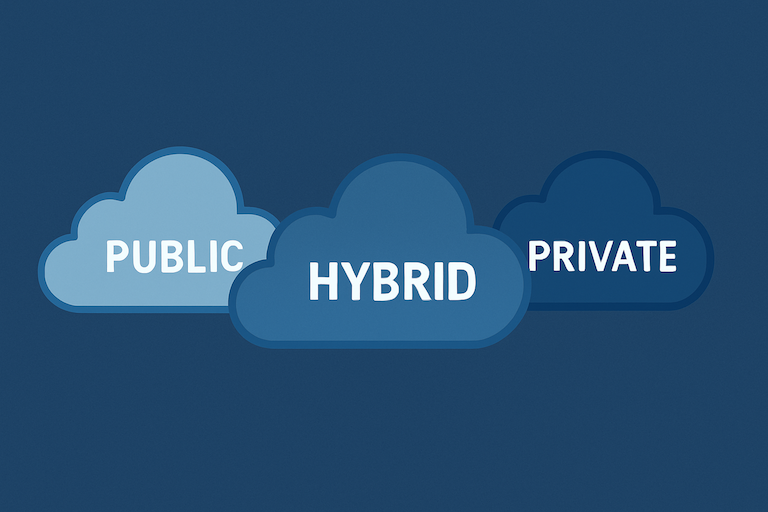
Hybrid cloud integrates public cloud services with private or on-premises infrastructure, enabling seamless data and application sharing while balancing scalability with control. Multi-cloud involves leveraging services from multiple public cloud providers to mitigate vendor lock-in and enhance portability across environments. Private cloud, in contrast, dedicates resources exclusively to a single organization, often hosted on-premises or via managed services, emphasizing data sovereignty, customization, and compliance.
These strategies address varying enterprise needs: hybrid for optimized workload distribution, multi-cloud for redundancy and best-of-breed services, and private for sensitive operations requiring stringent security.
Status as of Mid-2024
By mid-2024, adoption rates reflect widespread integration. Approximately 89% of organizations employ multi-cloud strategies, while 80% utilize hybrid models, often combining public and private elements for cost efficiency and resilience. The hybrid cloud market was valued at USD 82.61 billion in 2024, projected to reach USD 236.55 billion by 2033. Private cloud revenue stood at USD 143.94 billion in 2024, anticipated to grow at a 29.7% compound annual growth rate. Multi-cloud management solutions were worth USD 10.71 billion in 2024, expected to expand to USD 75.15 billion by 2032. Overall, public cloud spending is forecasted to exceed USD 595 billion in 2024, with hybrid and multi-cloud driving much of this growth.
These figures indicate a maturing market where enterprises prioritize interoperability and risk mitigation, though challenges such as complexity in management persist.
Major Players
The sector is dominated by established hyperscalers and specialized providers:
- Amazon Web Services (AWS): Leads with a 33% market share in cloud infrastructure, offering robust hybrid tools.
- Microsoft Azure: Holds 22% share, excelling in hybrid and private solutions like Azure Stack.
- Google Cloud: Commands 10% share, focusing on multi-cloud with Anthos.
- IBM and Oracle: Provide enterprise-grade private and hybrid options, emphasizing security.
- VMware (Broadcom): Specializes in virtualization for private and hybrid environments.
- Alibaba Cloud: Strong in Asia-Pacific for multi-cloud deployments.
These players collectively control over 65% of the global market, with AWS, Azure, and Google leading in innovation.
Prevailing Trends
Mid-2024 trends underscore a shift toward integration and efficiency:
- AI and Machine Learning Integration: Cloud platforms increasingly embed AI for automated management, with 70% of companies adopting AI-enhanced solutions.
- Edge Computing Convergence: Hybrid models extend to edge environments for low-latency applications, rebranding as "distributed clouds."
- Security and Compliance Focus: With regulations like DORA, hybrid and private clouds prioritize data protection, leading to advanced tools for portability and privacy.
- Sustainability and Cost Optimization: Enterprises seek eco-friendly data centers and tools to curb cloud waste, amid a 22% rise in spending.
- Serverless and Containerization: Growth in these technologies facilitates seamless multi-cloud operations.
These trends reflect a move toward resilient, flexible infrastructures.
Main Products
Established offerings include:
- AWS Outposts and EKS Anywhere: For hybrid extensions of AWS services to on-premises.
- Azure Arc and Azure Stack: Enable multi-cloud management and private deployments.
- Google Anthos: Supports hybrid and multi-cloud Kubernetes orchestration.
- VMware Cloud Foundation: Integrates private and hybrid virtualization.
- IBM Cloud Satellite: Facilitates secure multi-cloud connectivity.
- Oracle Cloud@Customer: Delivers private cloud-like experiences with public scalability.
These products emphasize interoperability and workload portability.
Emerging Products and Startups
Innovation is accelerating through startups and new offerings:
- Emerging Products: Tools like Veeam's hybrid data management services for enhanced portability, Zscaler's security for multi-cloud, and NVIDIA's AI-optimized GPUs for edge-hybrid integration. Serverless platforms such as AWS Lambda and Azure Functions are evolving with AI capabilities.
- Startups: CoreWeave provides GPU-focused infrastructure for AI in hybrid setups; Wiz offers cloud-native security for multi-cloud; Cast AI optimizes costs across providers; Prosimo delivers multi-cloud networking; Spectro Cloud focuses on edge and Kubernetes management, raising $75 million in 2024. These entities, often AI-driven, are capturing market share by addressing niche needs like cost efficiency and security.
Conclusion
As of mid-2024, hybrid, multi-cloud, and private cloud strategies form the backbone of modern IT, with high adoption rates and projected growth underscoring their strategic value. Major players like AWS, Azure, and Google drive innovation, while trends in AI integration and edge computing shape the future. Established products ensure stability, complemented by emerging solutions from startups that introduce agility and specialization. Organizations should assess these elements to align infrastructure with operational goals, ensuring resilience in a dynamic environment.