Silver, Critical Minerals, and the Future of AI Data Centers
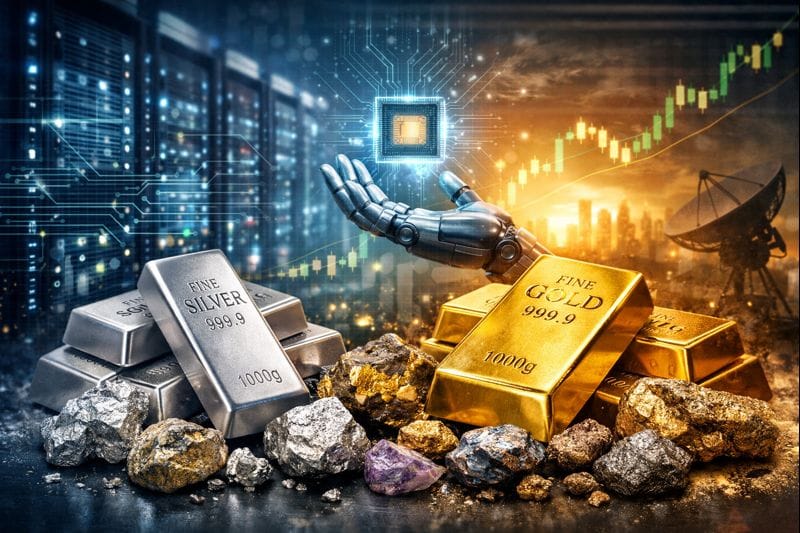
The AI boom of 2025 marked a pivotal moment for technology, but it also cast a spotlight on a less-discussed but equally critical issue: the materials that power AI infrastructure. While GPUs, TPUs, and ASICs make headlines, the metals and minerals underpinning servers, networking equipment, and data center power systems are increasingly shaping the industry’s trajectory—and Wall Street is taking notice.
Among these materials, silver stands out as a metal whose price movements, supply constraints, and industrial demand have far-reaching implications for AI compute, cloud infrastructure, and related investment opportunities.
The Industrial Silver Surge
Silver isn’t just a precious metal for jewelry or investment; it’s a key industrial metal in high-performance electronics. Its unmatched electrical conductivity, thermal stability, and corrosion resistance make it indispensable for:
- High-speed connectors and PCB traces
- Power distribution in data centers
- Thermal interface materials
- Critical components in AI-optimized servers
AI servers, especially those designed for massive GPU and TPU clusters, use more silver per unit than standard servers. The growing density and computational demand of AI workloads means that silver consumption in data centers is rising sharply, contributing to record-breaking industrial demand.
According to the Silver Institute, industrial silver use now represents a substantial portion of total global demand, driven by AI data centers, EVs, and solar PV systems. This demand surge, coupled with stagnant mine production, has created a structural supply deficit.
Supply Constraints and Price Dynamics
Global silver production has been unable to keep pace with rising demand. Several factors contribute to the supply tension:
- Mines are aging and underinvested
- Production growth is slow due to operational and geopolitical constraints
- Recycling alone cannot bridge the gap
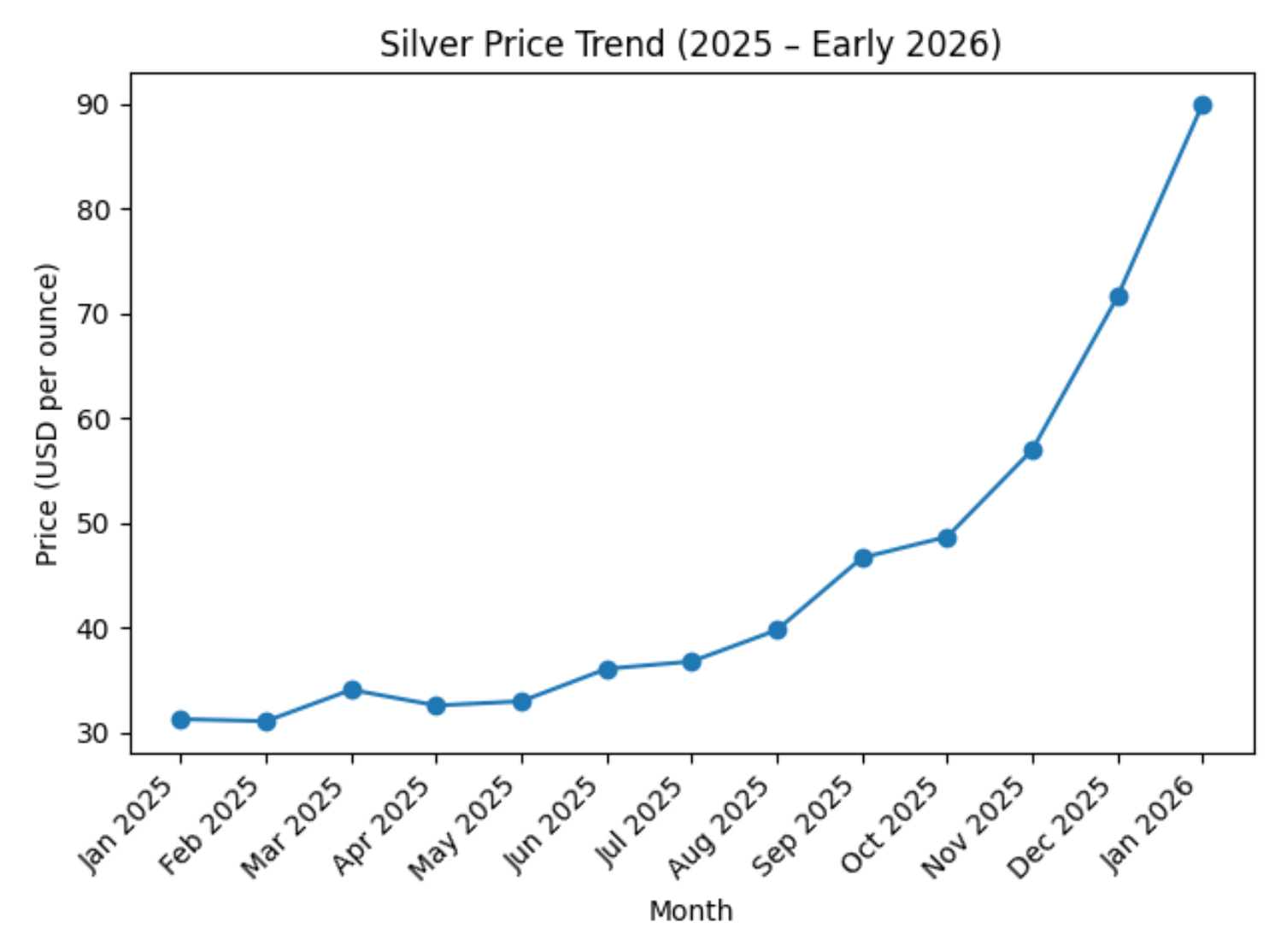
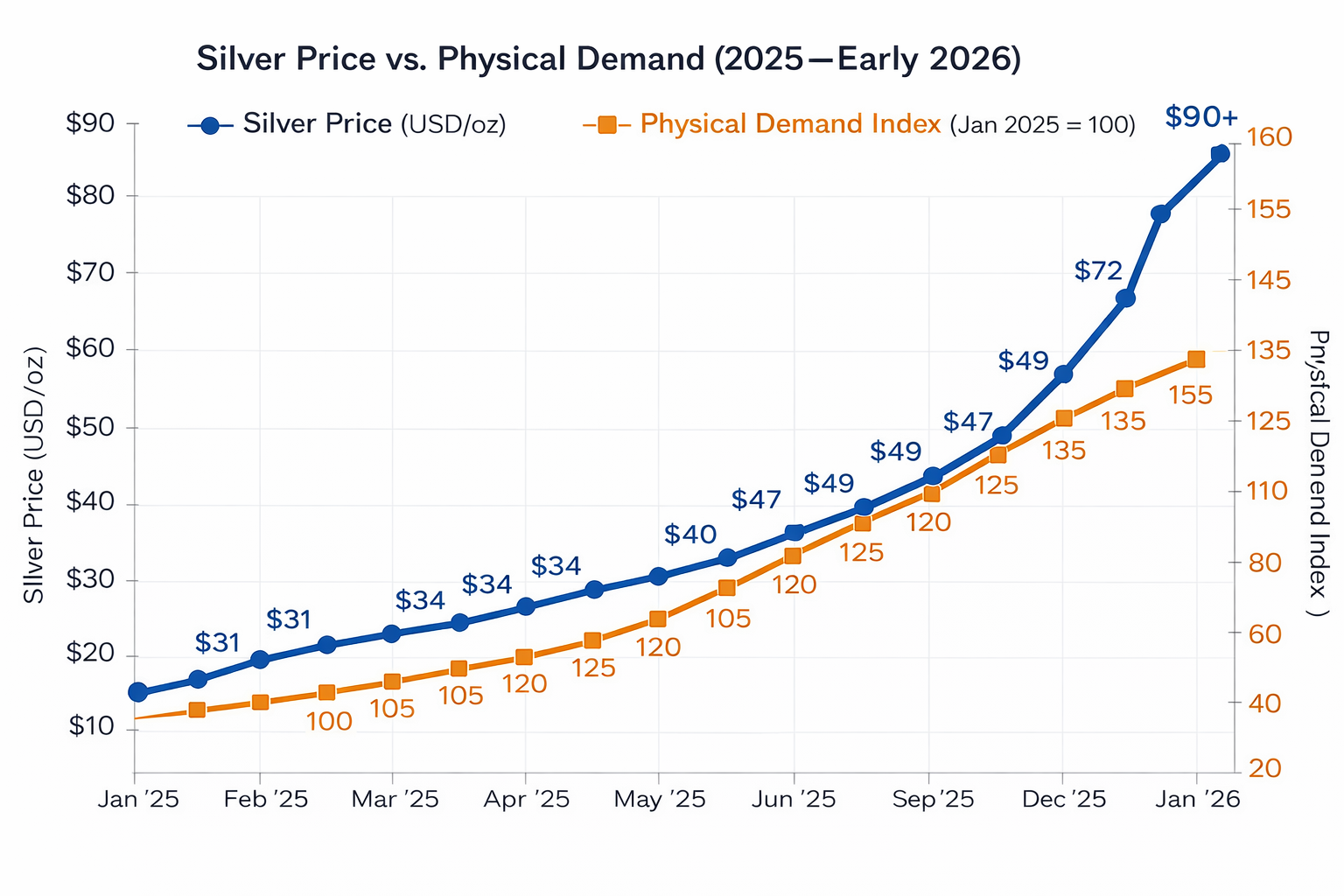
As a result, silver prices have soared, trading between $65–$95 per ounce in late 2025–early 2026, a multi-year high. The surge reflects a classic supply-demand imbalance, compounded by speculation and industrial hedging.
Impact on Cloud Infrastructure and AI Data Centers
Rising silver prices have direct and indirect effects on AI infrastructure:
1. Hardware Costs Increase
Silver is integral to connectors, PCBs, and high-reliability server electronics. Elevated prices raise the cost of building servers and racks, directly impacting:
- CapEx for hyperscalers and private cloud operators
- Enterprise AI infrastructure budgets
- Cloud service pricing over time
2. Supply Chain Vulnerability
The majority of industrial silver comes from countries such as Mexico, Peru, and China. Geopolitical risks or production disruptions can affect the supply of essential server components, delaying AI deployment or increasing procurement costs.
3. Innovation and Substitution Pressure
Manufacturers are exploring:
- Alternative conductive materials (copper alloys, graphene composites)
- Improved recycling from old electronics
- Design changes to reduce silver usage without sacrificing performance
This is essential for maintaining cost efficiency and deployment speed, especially for high-density AI clusters.
Wall Street and HYMC: A Case Study in Market Response
The surge in silver prices has drawn Wall Street attention to mining equities, particularly Hycroft Mining (HYMC). Hycroft, which operates a major Nevada-based silver and gold mine, is highly leveraged to silver price movements.
- Stock Performance: HYMC has experienced significant gains in late 2025, tracking rising silver prices and strong industrial demand.
- Investor Interest: The combination of a large silver deposit and record prices makes HYMC attractive to investors seeking exposure to the AI-driven industrial metal surge.
- Strategic Moves: HYMC recently announced a $60 million private placement to expand operations and capitalize on high silver prices, reflecting confidence in ongoing industrial demand.
Other silver miners, including Hecla Mining, Pan American Silver, and Endeavour Silver, have seen similar stock performance, highlighting Wall Street’s recognition that AI infrastructure growth directly translates into demand for industrial metals.
Critical Minerals Beyond Silver
While silver is the most visible, AI data centers depend on a broader suite of minerals, including:
- Copper: For power distribution and cooling systems
- Tin, Tantalum, Palladium, and Rare Earths: For high-speed interconnects, semiconductors, and advanced electronic components
Hyperscale facilities and AI labs are projected to consume millions of tons of these metals over the next decade, with copper demand alone expected to surge as power distribution and high-density compute racks expand.
Strategic Implications for AI Infrastructure
For Cloud Providers
- Securing long-term contracts with mining companies becomes critical
- Recycling and urban mining initiatives may become integral to sustainability
- Material cost volatility must be factored into CapEx and O&M budgets
For Hardware Manufacturers
- Innovation in metal substitution and efficiency becomes a competitive edge
- Supply chain resilience is essential to avoid production bottlenecks
For Investors
- Mining equities such as HYMC provide leverage to AI-driven industrial demand
- ETFs or funds tracking industrial metals may outperform broader indices in periods of rising AI deployment
For Policymakers
- Silver and other critical minerals may become strategic national resources
- Incentives for domestic mining and recycling can reduce dependency on international supply chains
Conclusion: Metals as the Hidden Backbone of AI
The AI revolution isn’t powered by GPUs alone—it depends on the metals and minerals that make modern data centers and servers possible. Silver, copper, and other critical metals form the hidden backbone of cloud infrastructure, and their supply, pricing, and geopolitics directly influence the pace and cost of AI deployment.
Rising prices for silver and other industrial metals are reshaping cloud infrastructure economics, creating ripple effects for hyperscalers, private labs, enterprises, and investors alike. Stocks such as Hycroft Mining (HYMC) illustrate how Wall Street is recognizing the strategic value of industrial metals tied to AI growth.
In short, as the world builds out AI infrastructure, stakeholders must track not just software, silicon, and servers—but the metals that power them, because they now determine the future scalability, cost, and resilience of AI itself.