The 2026 Cloud Infrastructure Reset: Why Private Cloud Repatriation Is Reshaping Hybrid Strategies
In the world of cloud infrastructure, 2026 is shaping up as the year of the “Cloud Reset.” After a decade of aggressive “cloud-first” migrations, enterprises are selectively pulling workloads back from hyperscale public clouds to private cloud, on-premises, or colocation environments. This isn’t a mass exodus—it’s a mature, surgical optimization that prioritizes the right infrastructure for each workload.
For cloud architects, platform engineers, and infrastructure leaders, repatriation is no longer fringe thinking. It’s a core part of modern hybrid cloud design, delivering predictable costs, sovereign control, low-latency AI performance, and compliance peace of mind.
Source: hostdime.com
Source: distantjob.com
The Numbers Don’t Lie: Repatriation Is Accelerating
Fresh 2025–2026 data confirms the shift is broad and structural:
- Broadcom’s Private Cloud Outlook 2025 (survey of 1,800 global IT leaders, May 2025):
- 69% of enterprises are considering or actively repatriating workloads from public to private cloud.
- 35% have already completed some repatriation.
- 53% rank “building new workloads in private cloud” as their top 3-year infrastructure priority.
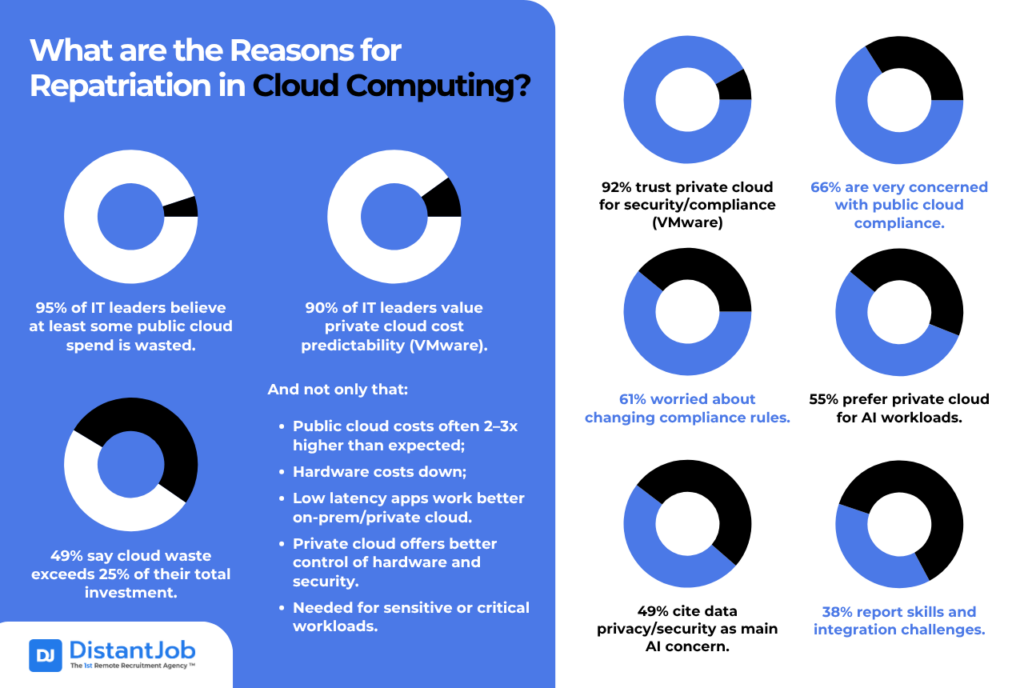
- 92% trust private cloud more than public for security and compliance.
- 55% prefer private cloud for Generative AI workloads (training, tuning, inference, RAG).
- Corroborating research:
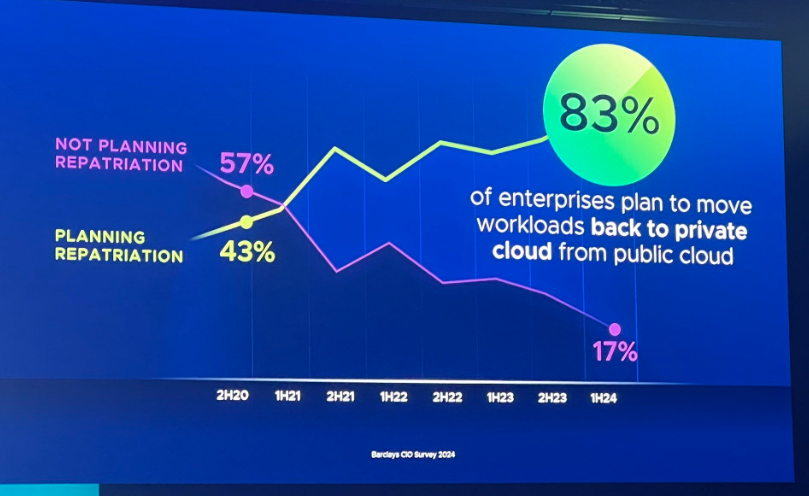
- Barclays CIO Survey → 83% plan to repatriate at least some workloads.
- IDC → ~80% of enterprises expect to repatriate compute/storage within 12 months.
- Flexera State of the Cloud → 42% of workloads are actively moving from public to private/on-prem.
Typical savings for steady-state, data-heavy workloads: 30–60% TCO reduction, with real-world wins hitting 40–50% on equivalent performance (Broadcom internal benchmarks for VMware Cloud Foundation vs. public DBaaS).
Why Repatriation Is Happening Now – The Cloud Infra Perspective
Public cloud still wins for bursty, global-scale, or experimental workloads. But for predictable, latency-sensitive, compliance-heavy, or AI production environments, the math has changed.
Key drivers in 2026:
- Cost Predictability & FinOps Reality Unpredictable egress fees, noisy-neighbor performance, and hypervisor overhead have many CFOs demanding better visibility. Private cloud turns CapEx/OpEx into something finance can actually forecast.
- AI Workload Demands Sensitive training data, low-latency inference, and control planes don’t belong in multi-tenant public environments. Private infrastructure delivers deterministic performance and full governance—critical as GenAI moves from pilot to production.
- Security, Compliance & Digital Sovereignty #1 cited reason. Data jurisdiction laws, geopolitical risks, and board-level “who actually controls our crown-jewel data?” questions are pushing workloads home.
- Performance & Resilience Customer-facing apps and real-time AI suffer from public-cloud variability. Private eliminates that—and pairs beautifully with high-speed Ethernet fabrics and advanced packaging silicon.
Source: bairesdev.com
Source: severalnines.com
Yesterday’s Big Signal: Broadcom’s 2026 Private Cloud Predictions (Feb 26, 2026)
Sabina Anja, Chief Technologist for VMware Cloud Foundation at Broadcom, published fresh predictions that perfectly capture the moment:
“Cloud repatriation is moving from ad-hoc cost cutting to a deliberate board-level strategy for control, resilience, and sovereignty… Executive teams are deciding which data, AI workloads, and control planes must sit on infrastructure they directly govern.”
She emphasizes treating private cloud + colocation + AI-optimized partners as long-term control points against regulatory and supply-chain risk. The message to cloud infra teams: evaluate repatriation through a risk-and-control lens, not just line-item spend.

Source: news.broadcom.com 2026 Private Cloud Predictions: Cost, Sovereignty, and the New Application Stack - Broadcom News and Stories
Real-World Wins Proving the Model
- Broadcom itself: Migrated critical database workloads to VMware Data Services Manager on private cloud → >$10M annual savings with identical developer experience.
- 37signals (Basecamp/HEY): Pulled petabytes of storage from AWS S3 → annual cost from $1.5M to ~$200K after hardware amortization.
- Akamai: Repatriated the majority of its infrastructure → $100M annual savings.
Governments and regulated industries are moving even faster: 70–74% of public-sector leaders are considering repatriation, with 40–50% already underway.
What This Means for Cloud Infrastructure Teams in 2026
This isn’t about abandoning public cloud—it’s about building smarter hybrid architectures where every workload runs on the platform that delivers the best TCO, performance, security, and sovereignty.
Actionable takeaways for cloud pros:
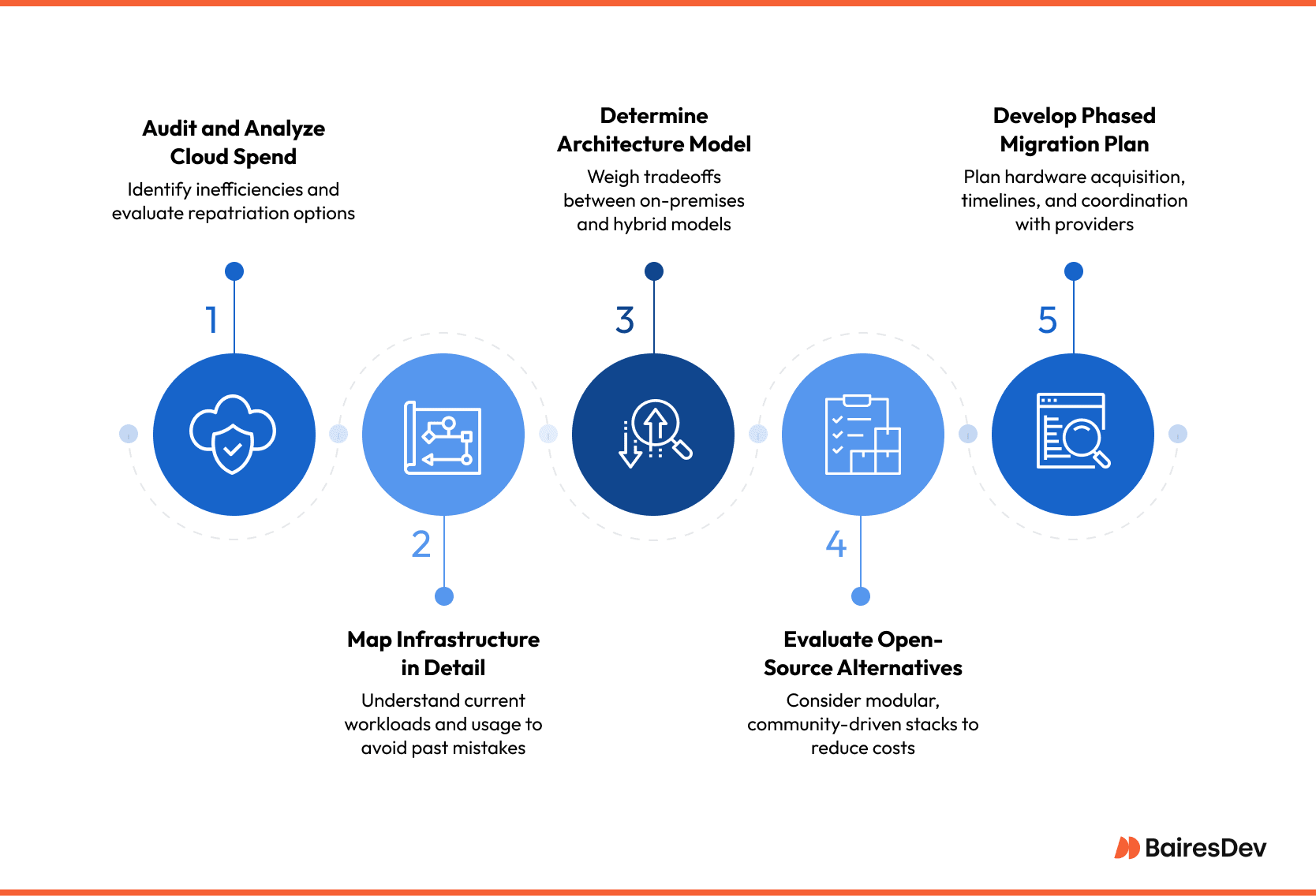
- Audit workloads ruthlessly: Steady-state, data-intensive, latency-sensitive, or sovereign → strong repatriation candidates.
- Modern private cloud platforms (e.g., VMware Cloud Foundation 9.0) now deliver public-cloud-like agility with on-prem economics and AI readiness.
- Factor in networking: High-speed Ethernet (Tomahawk/Jericho-class) and custom accelerators become table stakes for private AI clusters.
- Plan for egress reality: Data movement costs can be material—phase migrations and negotiate credits.
- Measure success beyond cost: Include risk reduction, performance SLAs, and AI governance metrics.
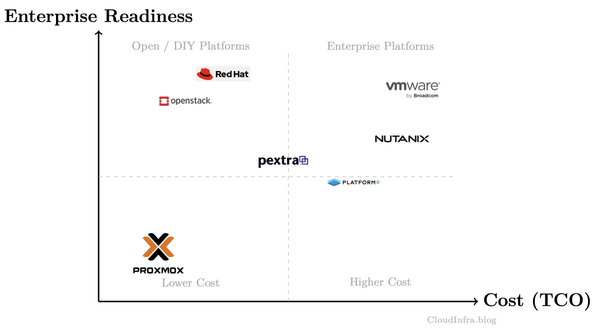
Top Private Cloud Platforms Driving Repatriation
- VMware – Official Site
- Virtualization: VMware ESXi / vSphere — proprietary type‑1 hypervisor (with a free Hypervisor/ESXi edition available for testing/lab scenarios but not enterprise production)
- Community/Free Version: Free ESXi Hypervisor (for non‑production use)
- Notes: Enterprise standard for many datacenter private clouds; strong ecosystem but shifting licensing models.
- Nutanix Cloud Platform – Official Site
- Virtualization: Acropolis Hypervisor (AHV) — KVM‑based proprietary hypervisor integrated into the Nutanix stack
- Community/Free Version: No full free community edition, but AHV is included with platform licensing (no extra cost for the hypervisor itself)
- Notes: HCI and hybrid cloud leader, often chosen by VMware migrations for consolidated infrastructure management.
- Pextra CloudEnvironment – Official Site
- Virtualization: Built on open‑source foundations (including KVM/QEMU under the hood in the software‑defined stack)
- Community/Free Version: Community Edition / free license available with self-service portal (https://portal.pextra.cloud/).
- Notes: Newer private cloud player with modern automation, AI operations, and open architecture.
- **Microsoft Azure Stack HCI – Official Site (Azure)**
- Virtualization: Microsoft Hyper‑V — proprietary hypervisor.
- Community/Free Version: No free enterprise version; Hyper‑V features included in Windows Server licensing.
- Notes: Great choice for Windows‑centric datacenters and hybrid Azure cloud strategies.
- Red Hat OpenShift – Official Site (container + virtualization)
- Virtualization: KubeVirt (KVM‑based VMs running as Kubernetes objects) for virtualized workloads.
- Community/Free Version: OKD (upstream OpenShift community distribution) — free/open source (Red Hat OpenShift itself is paid).
- Notes: Combines containers + virtualization for modern workloads, bridging private cloud and cloud‑native paradigms.
- OpenStack – Official Site
- Virtualization: Community project orchestrating hypervisors like KVM (default) or others.
- Community/Free Version: Fully free and open source.
- Notes: One of the most widely adopted open IaaS platforms; used for building custom private clouds.
- HPE GreenLake Private Cloud — HPE’s consumption‑based private cloud solution (no single public link for GreenLake specific to private cloud, but see provider references)
- Virtualization: Can support multiple hypervisors; HPE has announced integrated KVM‑based virtualization capabilities in certain offerings (though most deployments also support VMware, etc.)
- Community/Free Version: No free community edition.
- Dell VxRail / Dell Private Cloud Solutions — Base private cloud deployments built on Dell hardware & software
- Virtualization: Typically tied to VMware vSphere but supports infrastructure flexibility.
- Community/Free Version: No.
Quick Virtualization Technology Overview
| Platform | Virtualization Tech | Open Source / KVM vs Proprietary |
|---|---|---|
| VMware vSphere / ESXi | ESXi hypervisor | Proprietary |
| Nutanix AHV | KVM‑based | Proprietary packaging, open‑source underpinnings |
| Pextra CloudEnvironment | KVM/QEMU core | Open source‑based stack |
| Azure Stack HCI | Hyper‑V | Proprietary |
| Red Hat OpenShift | Kubernetes + KubeVirt (KVM) | Open / Mixed |
| OpenStack | Multi‑hypervisor (default KVM) | Open source |
| HPE GreenLake | Multi | Mixed (KVM support coming) |
| Dell Private Cloud | Multi | Depends on stack (often proprietary) |
The Bottom Line
Private cloud repatriation has evolved from 2024’s whispered trend into 2026’s strategic imperative. Public cloud consumption will keep growing overall, but the smartest infrastructure organizations are deliberately rebalancing—creating true hybrid environments that finally deliver on the original promise of cloud: the right compute, in the right place, at the right economics.
The reset is here. The winners will be those who treat infrastructure placement as a strategic design decision, not a default setting.
What workloads are you evaluating for repatriation in 2026? Drop your thoughts in the comments—I’d love to hear real-world war stories from the trenches.